
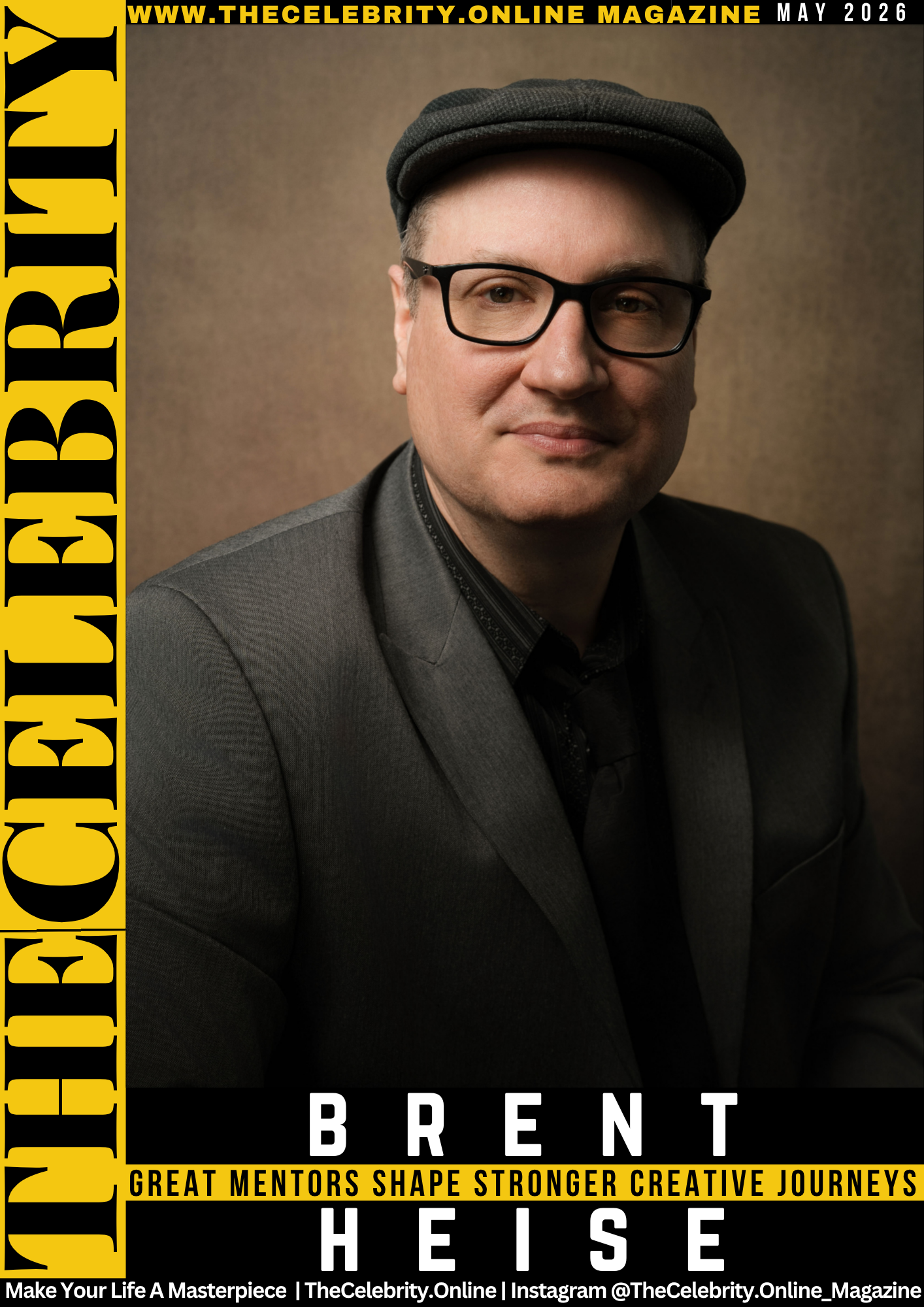
Brent Heise was recently interviewed by TheCelebrity.Online Magazine and here is the Q&A we had with Brent.
Brent Heise As Cover Story Interview – May 2026 Magazine Edition
How do you introduce yourself?
I’m Brent Heise, a filmmaker, editor, and visual storyteller currently based in Norfolk, Virginia. My journey with filmmaking began in childhood with a Minolta Super 8mm camera and a Kodak Presstape splicer, and that fascination with emotionally driven imagery has shaped every stage of my career. Over the years, I’ve worked across independent film, animation, documentary, advertising, and music-driven cinema.
My work has included editorial and production projects for agencies, nonprofits, and animation studios, including collaborations with Bent Image Lab for Harold and the Purple Crayon, Rudolph the Red-Nosed Reindeer: The 4-D Experience, and David Oyelowo’s The Water Man. I’ve also had the privilege of collaborating with songwriter Tom Guernsey, whose music became the inspiration for The Girl Who Faded Away.
With the involvement of Co-Writer, Executive Producer, and music industry legend George Daly, this project became an especially meaningful milestone for me. The film screened at more than 30 festivals worldwide and received a Telly Award, which was incredibly rewarding because the project was deeply personal and rooted in honoring Tom’s artistic legacy through cinematic storytelling. George was there to honor his former bandmate and to offer his creative brilliance.
Struggle – What hardships have you gone through in life?
Like many independent filmmakers, one of the biggest challenges has been sustaining creative work while navigating limited resources and changing industries. Independent filmmaking often requires wearing every hat at once — directing, editing, visual effects, producing, and problem-solving constantly.
Another emotional challenge was collaborating with Tom Guernsey during his battle with ALS. Watching someone with such artistic brilliance face physical decline was heartbreaking, but it also reinforced the importance of preserving stories before they disappear. That experience deeply influenced my perspective on memory, loss, and legacy, themes that later became central to The Girl Who Faded Away.
There have also been periods where balancing commercial work with personal artistic ambitions required a lot of persistence and patience. But every challenge ultimately strengthened my commitment to meaningful storytelling.
What do people usually not know about you?
People are often surprised to learn how much of my work is rooted in editing and post-production craftsmanship. While directing is visible to audiences, I’ve spent years shaping emotional rhythm through editorial work, visual effects, and subtle cinematic detail.
Many also don’t realize how much historic preservation and cultural memory inspire me creatively. Whether documenting local monuments in Norfolk or filming in historic locations, I’m drawn to places that echo forgotten stories. That fascination with memory, time, and atmosphere strongly influences the tone of my films.
I also genuinely enjoy creating projects connected to nonprofit and community causes. Some of the most fulfilling work I’ve done involved helping organizations that support education, preservation, and vulnerable communities.
What sets you apart from others?
I think what distinguishes my work is the combination of emotional storytelling with a strong background in editorial and visual effects. I’m very focused on atmosphere, memory, and the emotional resonance of imagery rather than spectacle alone.
Because I’ve worked across so many formats — indie film, animation, documentary, advertising, music videos, and nonprofit storytelling — I’ve developed a flexible cinematic language that adapts to different audiences while still maintaining a personal artistic voice.
With The Girl Who Faded Away, for example, I approached the project less like a conventional music video and more like a cinematic meditation on love, nostalgia, and fading memory. The response from audiences, including more than 30 festival screenings worldwide and a Telly Award, confirmed that emotionally driven visual storytelling still connects deeply with people.
What are your upcoming major events?
I’m continuing to develop projects centered around history, music, and cultural preservation while documenting historic locations and monuments in Norfolk, Virginia. I’m also exploring additional visually driven narrative projects that combine music, atmosphere, and emotional storytelling in the spirit of The Girl Who Faded Away.
At the same time, I continue producing video work for nonprofit organizations and preservation-focused initiatives, which remains an important part of my creative mission.
I’m moving back to Portland, Oregon, in the coming weeks. I also have a new film in the festival circuit as well, “The Heron Who Set The Koi Free”:
So far, it is an official selection at Spring Time International Film Festival and at Elegant International Film Festival, with results pending.
What expert advice would you like to give?
Do not underestimate the value of mentorship. Working alongside the famed professional George Daly helped me come into my own, find confidence in my work, and make art with broader appeal. Celebrate your mentors along the way!
I encourage emerging filmmakers to develop strong editorial instincts. Editing teaches you rhythm, structure, pacing, and how audiences emotionally process images. Some of the most powerful filmmaking decisions happen in post-production.
Protect your creative voice. Independent filmmaking can involve a lot of uncertainty, but authenticity resonates more strongly than imitation. The projects that endure are usually the ones created from genuine passion and personal connection.
Your social media handles and website links?
- Official website: https://brentheise.com/
- Instagram: https://www.instagram.com/brentheiseproductions/
- YouTube: https://www.youtube.com/@BrentHeise
- Facebook:https://www.facebook.com/brentheiseproductions/
- IMDb: https://www.imdb.com/name/nm6952579/
Tom Harrecks is an Author at TheCelebrity.Online Magazine who has a vast experience of covering interviews in various international media agencies.